- [email protected]
- Mouthiers sur Boëme, France
- +33 972 508 828
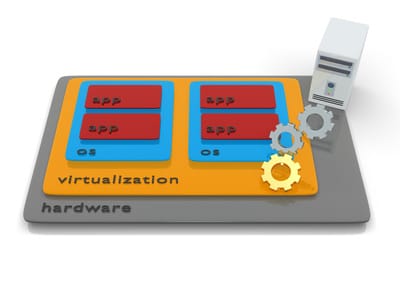
Virtualisation comes in several forms:
Practical examples
Storage virtualisation groups several physical hard drives into a single logical entity, optimising space and performance.
Companies use desktop virtualisation to give their employees uniform, secure environments that can be accessed from any device.
Additional advantages
Virtualisation is the ability to run several separate servers (web, SQL, email, firewall, …), called
En savoir plusHigh availability (HA) ensures that your systems and applications remain accessible at all times, even
En savoir plusA virtualised architecture is an infrastructure in which servers, storage and sometimes networks are virtualised.
En savoir plus
